Tiered (1D Forces) Problems

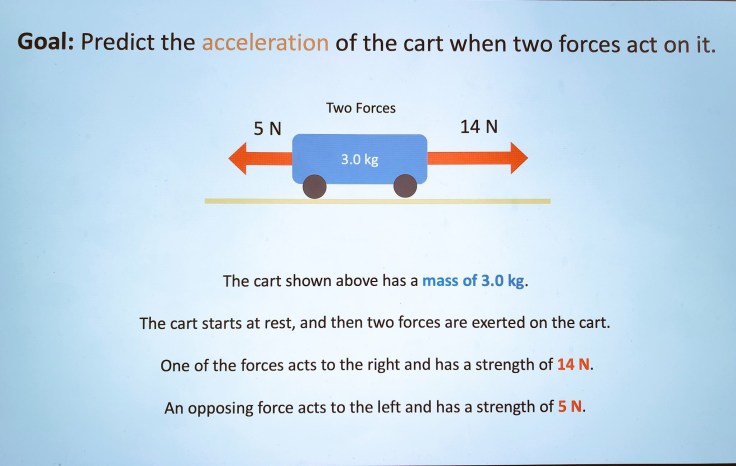
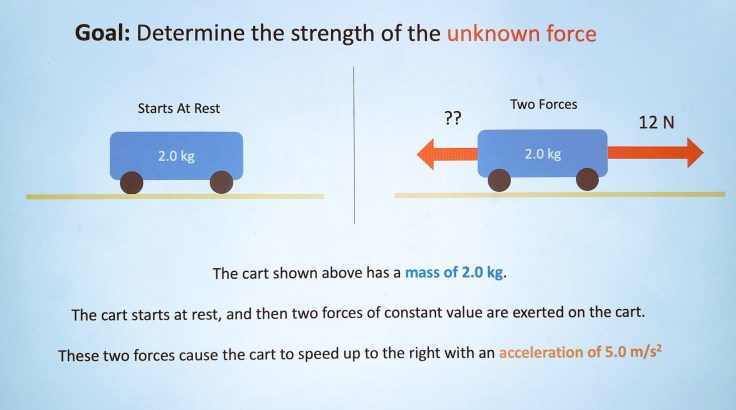
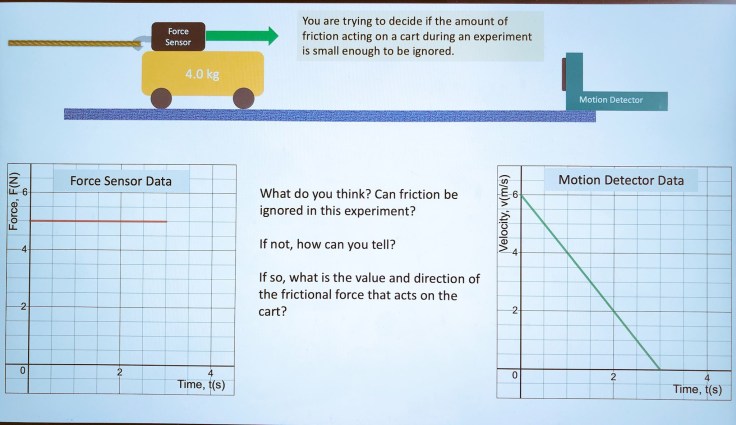
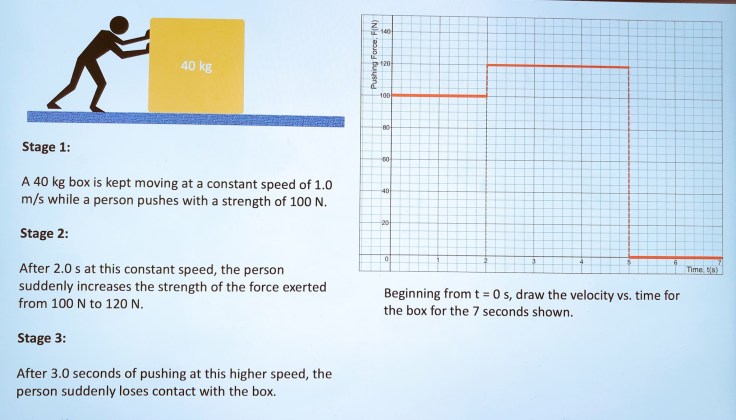
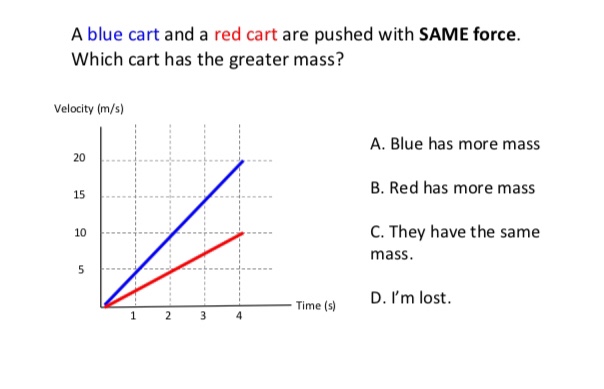
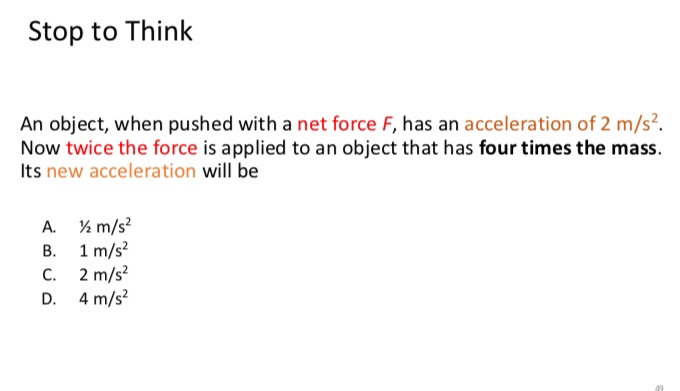
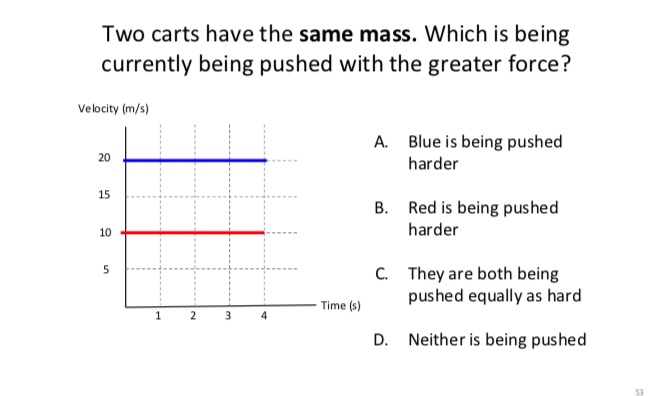
This semester I tinkered with writing problems that assess the same content but at different levels of sophistication.

I found this kind of thing useful in getting a better sense of students’ strengths and weaknesses, and hope to explore it more in the future.

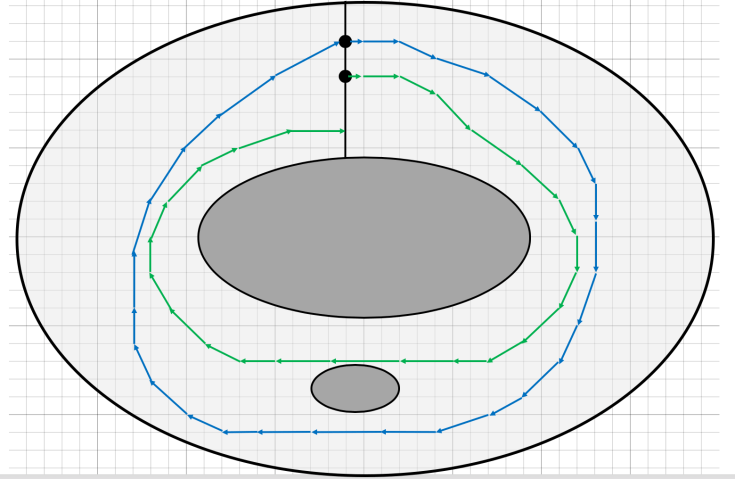
Who taught me this racing game?

I’m guessing it was Frank who taught me this game, but from what I remember the rules are something like

  1. Your velocity vector updates your position.
  2. Each turn, you must accelerate your velocity vector by 1 square —  up, down, left, or right.
  3. If you crash into a wall, your velocity drops to zero, and/or maybe there is some penalty.

Screen Shot 2018-12-16 at 5.18.15 PM

Different Approaches as a Sign of a Healthy Ecosystem

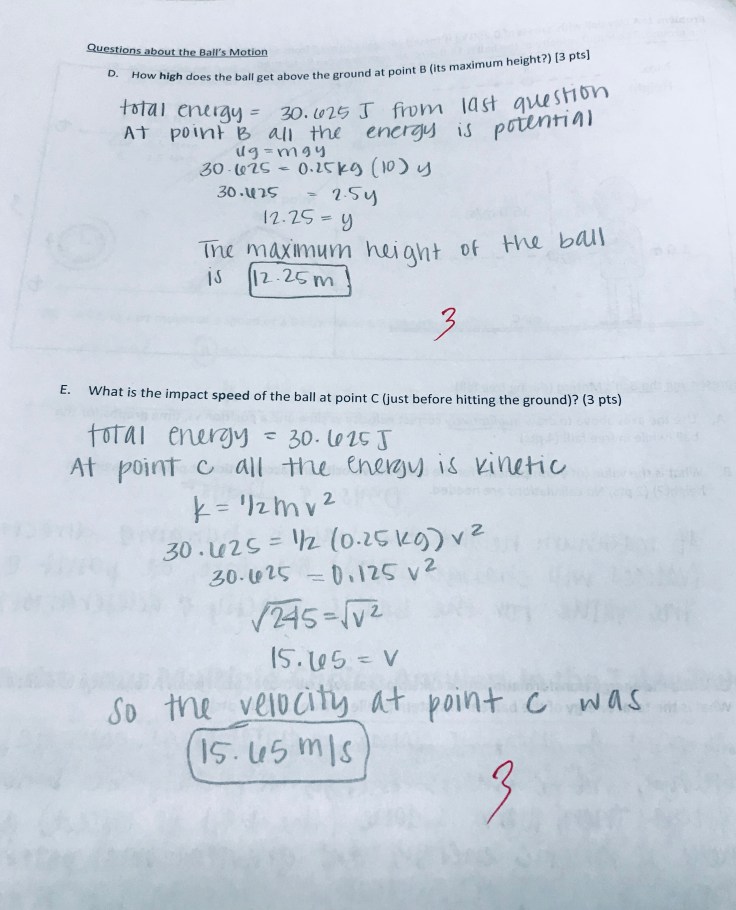
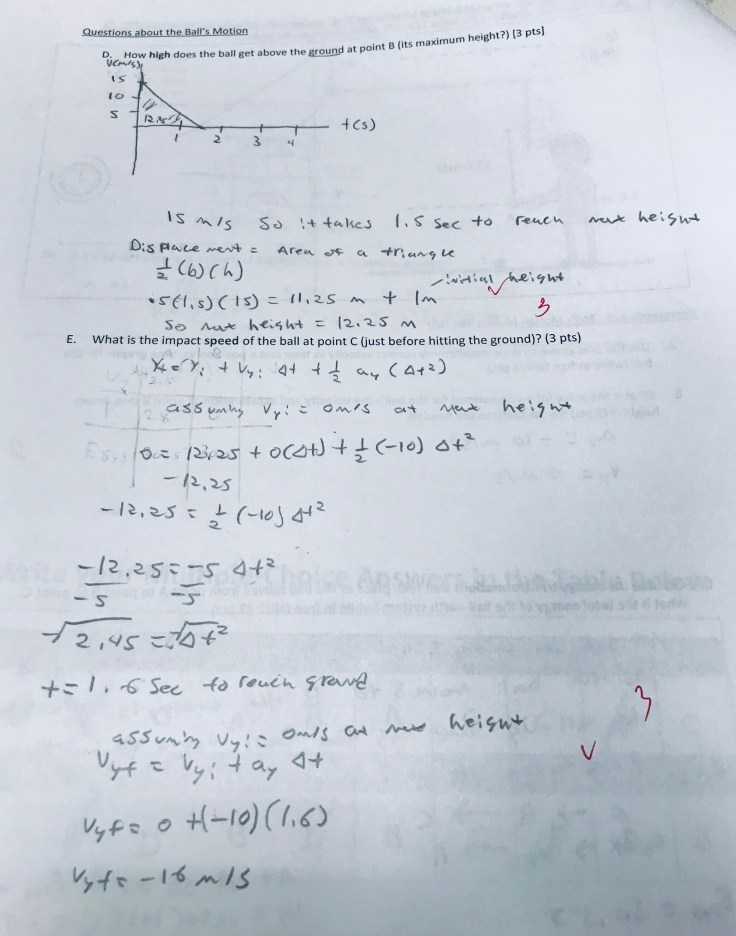
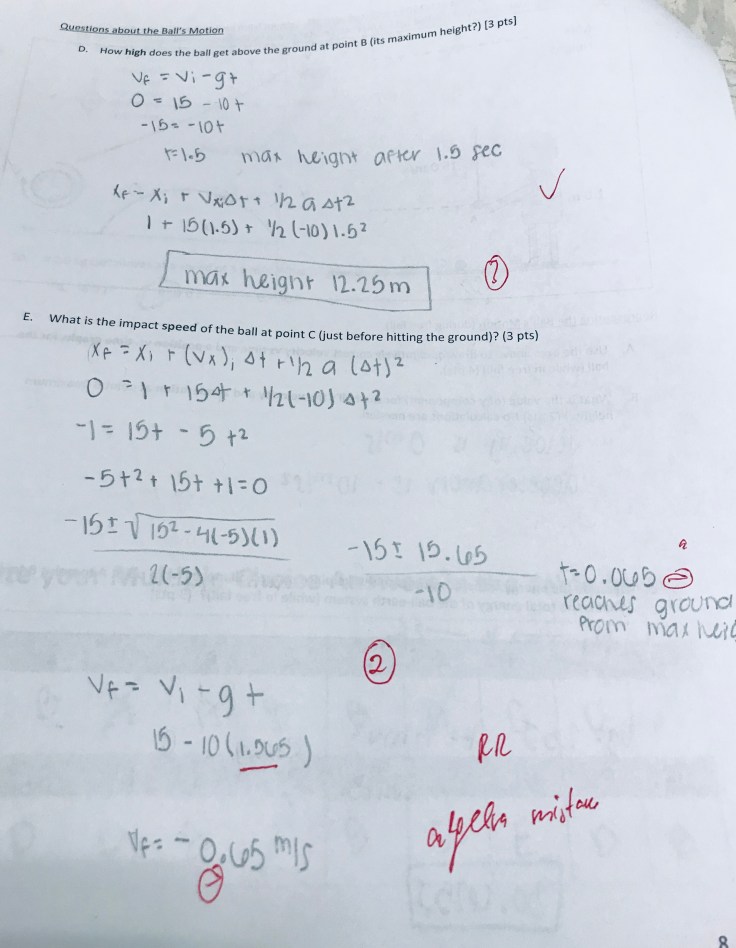
I find it a healthy sign at the end of semester when there are many different ways that students approach solving a problem. Most students took an energy approach here (which is very sensible), but plenty of students also took various kinematic approaches.

Below are just a sample of my students’ work although I was not the grader for this problem.

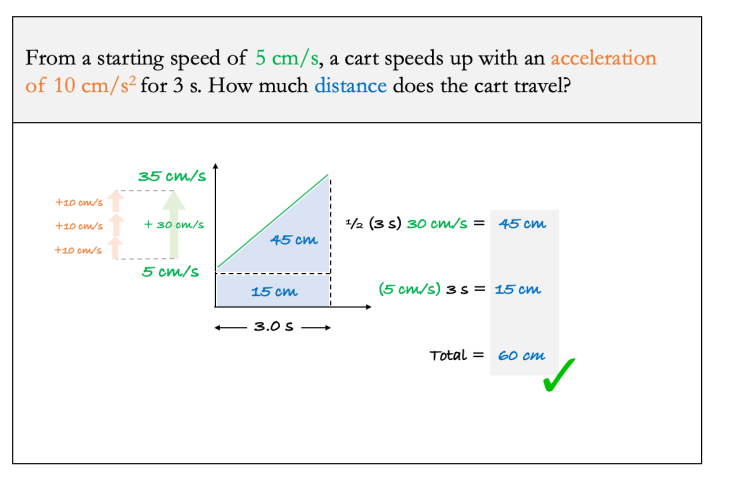
More experimenting in worked example layouts

This is the kind of strategy that I think is really important for my future physics teachers. I oscillate over the years about whether and how much to do this with students.

Screen Shot 2018-12-02 at 5.38.18 PM

I added a few more correct examples, just playing with different formats, and show-casing different strategies.

Screen Shot 2018-12-04 at 6.31.59 AMScreen Shot 2018-12-04 at 6.31.41 AMScreen Shot 2018-12-04 at 6.31.29 AM

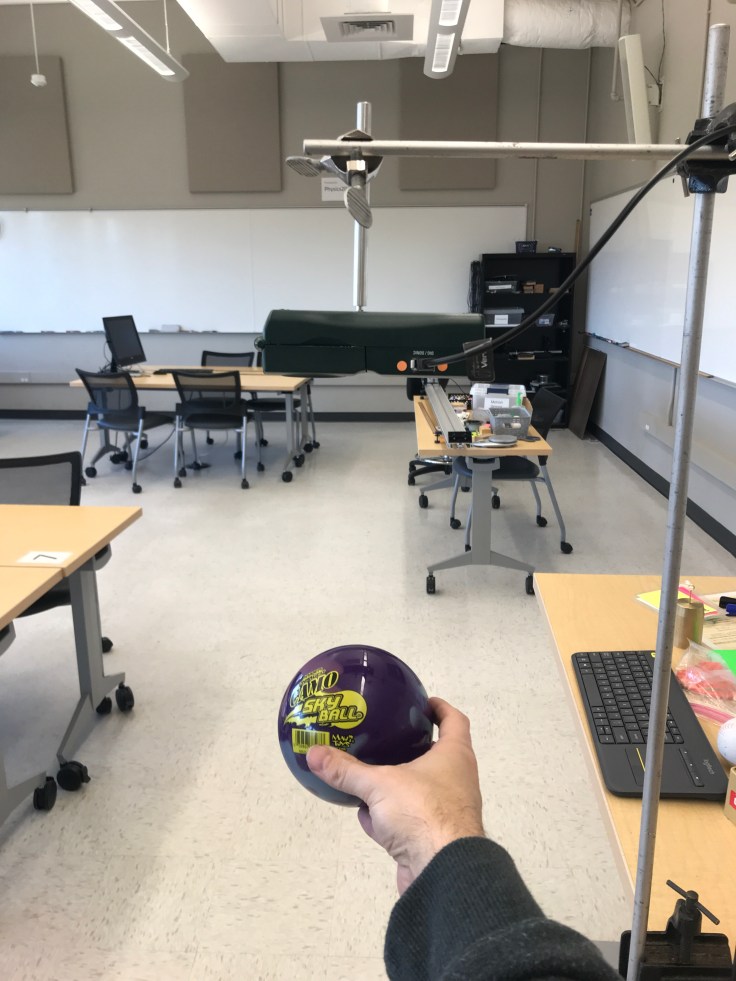
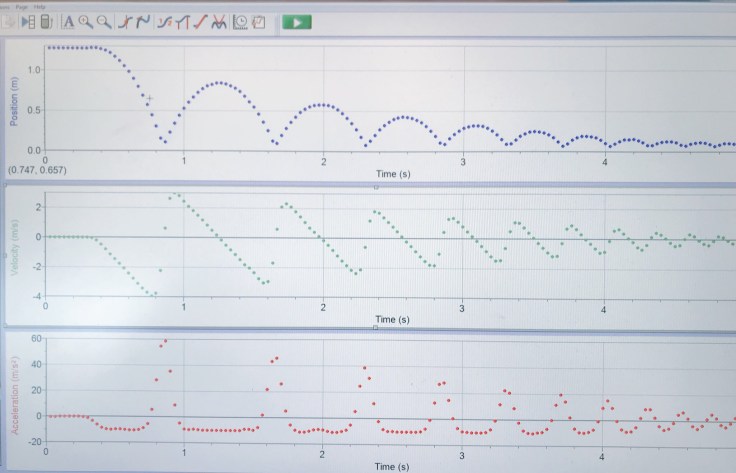
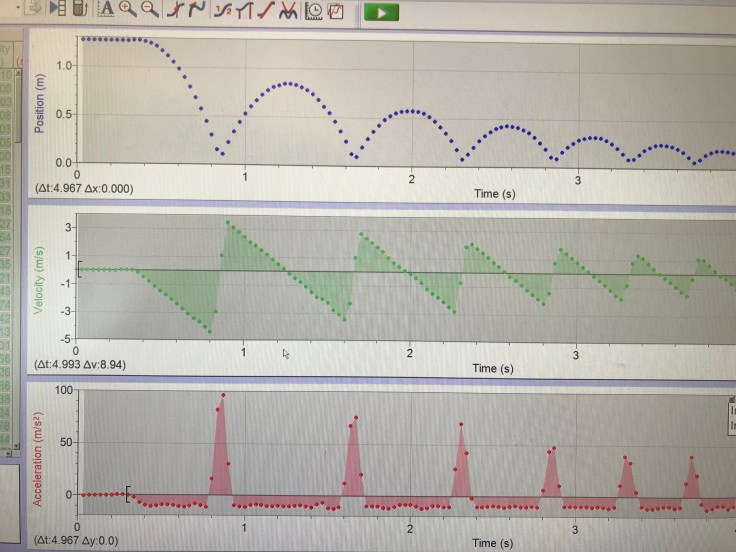
Bouncy Ball

Update from comments: Here is same data with less smoothing to calculate derivatives The peak acceleration during the first bounce is closer to 100 m/s/s where as before it was 60 m/s/s. The motion detector has max data collection rate of 30 Hz.

Magnetic Field Superposition Practice


I invested a lot more time having students work with superposition of magnetic fields this year before any calculations were involved. I am hoping this makes the transition to problem-solving easier.

Students had to map fields around bar magnets using compasses, and then also learn how to use the Vernier magnetic field sensor. Then they had to practice predicting and observing superposition for a variety of cases — for cases where strength only changed they used sensor, in cases where they direction changed, they used compasses.

Then they mapped field around current carrying wire, and practiced superposition with a card sorting task.

Students first sorted cards by whether the direction was Up, Down, or Zero. Then they reranked the cards by magnitude (strongest to weakest).

Next time I’d like to have wire sets up where they can also make and test predictions.

This slideshow requires JavaScript.

Blog at WordPress.com.
Up ↑