Once more unto the breach 

I’m starting to face the reality of how much emotional labor goes into teaching, and how unhealthy it can be to labor over an extended period of time without much of a reservoir to draw from. 
It hit me recently when was I reading an article in the Atlantic about anxiety and burnout in activism communities, and it really resonated with me about my own teaching:
“Excessive worry can lead to fatigue, lack of concentration, and muscle tightness,” Woodruff says. If that stress and worry becomes chronic, Lertzman adds, “people get overwhelmed. They burn out and short-circuit and turn their backs on the very issues that they care most deeply about.”

Activists pour a lot of emotional labor into their work, Chen says, which “heightens the risk of discouragement and despair when their work becomes too overwhelming.” Sometimes, for their health, people find it necessary to step away from activism altogether.

The symptoms of burnout include depression, anxiety, headaches and other physical ailments, substance abuse, loss of productivity, and trouble concentrating.”

There’s a part of me that thinks maybe I just need a sabbatical, but there’s also a part of me that thinks that (more fundamentally) I am prone to orienting toward teaching in ways that are just not sustainable. It’s something I will need to seriously commit to working on if I’m going to make it beyond another year or two.

I imagine this is a pretty common feeling for teachers at one point or another, especially for those who aim to teach in ways that are responsive and attentive to students. 

And I also imagine it is not uncommon to feel this way after getting tenure. It’s like you were probably already burned out, but now you can face it honestly.

Finally,  I think daycare has also helped me to have new perspectives on my own teaching that pertain to issues of emotional labor and emotional well being. 


Categorizations of Force

Today I was thinking about how categorize force:

Pushes vs Pulls

Vertical vs Horizontal

Centripetal vs Tangential

Contact vs Noncontact 

  • Within contact we have for classes for solid objects (normal, tension, friction, etc.), and classes for fluids such as lift, drag, buoyant, etc.
  • Within non-contact we have forces associated with fields such as gravitational, magnetic, electric, etc. 

When talking about energy, we identify forces as “working for”, “working against”, and “neither working for nor against” 

We also have categories like constraint forces, conservative forces, applied forces, dissipative forces, which sort of overlap with the categories above.

And I suppose there are fundamental forces, macroscopic vs microscopic, etc. 

Forces that belong to an interaction pair. 

Forces that all belong together on a single free-body diagram. 

Apparent Forces! 

I’m sure there are others I’m missing…
And I guess I’m not sharing anything new, except that I’m choosing right now to think of these as all the same kind of thing. Given some forces, in what sense do they belong or not belong? Learning these skills gives you different lenses to see forces. 

The other thing I’m thinking about is how there is a certain fixed order in which we often teach these; and I’m also thinking about how there are some that we explicitly see as skills to be practiced, and others that are sort of invisible. Like many times students learn about Newtons 3rd law before they are practiced at identifying pairs, which is a recipe for trouble. Or, this was first year that I explicitly spent time talking about the practice of just identifying forces that are working for, against, etc. 

The last thing I’m thinking about is how some difficulties in understanding force can only be resolved by doing cognitive work across these ways of categorizing.

If a student says something like, “the small box is pushing down on the big box with its weight.” There is no one fix that is needed. Instead, you need all of the ways: Forces that belong to pairs, force of different types (normal/weight), and forces that are either contact/non-contact, and forces that all belong to a free body diagram. You’ve got a set of forces you have to continually repackage in different ways. 

Problem-Solving Metaphors (Part 1 of __)

One of things I’ve been thinking about recently is the metaphor of problem-solving as “traversing a path”, and the ways in which the metaphor influences instruction. I don’t want to spend too much effort defending this claim, but I think it’s somewhat defensible for me to say that it’s one of a few primary metaphors we use to conceptualize problem-solving.

  • For example, there are problem-solving “steps” (and even missteps) and “paths” / “pathways”.
  • We might say to students, “You’re almost there!” or perhaps remark how “you got there a different way than me,” or “I think we’ve gotten off track somewhere,” or “You took the long way,” or “That’s an interesting short cut.”
  • It implies there’s some starting point, ending point, and the goal is to construct a path that gets you from the one starting to place to the one end place.
  • This metaphor allows us to bring in language such as dead ends, obstacles, and impasses.
  • We make use of this metaphor I think when we want to emphasize to students that it’s not the answer that’s important, but the solutions. We are saying, “It’s not the end point that matter as much as the path that gets you there.” In some sense, this makes problem-solving metaphor includes “route-finding” not just “path traversing”, and like even “orienteering” since you don’t even always no where you are and where you are headed.

Problem-Solving as “Map Making”

I guess I’ll start this blogpost by putting up front a slightly different alternative metaphor–one that is very Skempian, I suppose. I want to suggest here that something more akin to “map making” needs to be a part of the collection of metaphors that accompany  “route-finding” and/or “path traversing”. I’ll try to motivate it this way. If the mindset we want students to avoid is being to focused on “answer-seeking” (getting to the destination) and instead focus on “route finding” (constructing and traversing path), I might suggest that we as instructors might be making a similar mistake at a different level. We are focusing on problem-solving as “route finding” when we might be better served as seeing the activity as “map making”.

So here are some of my thoughts:

I think one of the concerns I have with “path traversing” is that there is often no landscape to even traverse, at least not initially in problem-solving. One has to explore the territory and then actually construct the landscape. The landscape is not simply there to be traversed. Now, I think we do kind of have language for this, like the whole metaphor of a “problem-solving space”, but the path-traversing metaphor draws attention to the path as the end-product. And the path is sequential in its nature. Certainly, in order construct that path you may wander around and explore, but the wandering and exploring is not the point. And so we admit, as experts, that it may take a non-sequential process in order to produce an end-product that is sequential (a traversed path).

I guess I should state that I don’t think I’m really adding anything new about what we know about problem-solving. We know that problem-solving is typically taught poorly, etc. Perhaps, what I am trying to add is is the idea that problem-solving is taught poorly (in part), because it’s wrapped up in this implicit metaphor. What I suspect might be true is that changing the way we teach problem-solving requires a new metaphor. And I don’t mean abandoning the old metaphors, because I’m sort of just using the same metaphor and taking a broader perspective. Students are focused on destinations, we want them to be thinking about paths. We are focused on paths, when we might be better served by thinking about maps?

So how might the map-making metaphor help? I think that map-making may help draw attention to a different end-product. There’s still, in the metaphor, a landscape to explore and routes and such, but the point of map-making is not to construct paths. It’s to know the terrain well enough to make a map–maps (I think) are useful in that they show relationships among parts of the landscape and they also foreground/background certain parts. Maps are not sequential, they are relational Any given path on the map is sequential. Hence, my reference to Skemp’s instrumental and relational.

I should probably get more concrete with this idea. So here is a student solution that I think is more “map like” then “path like”.

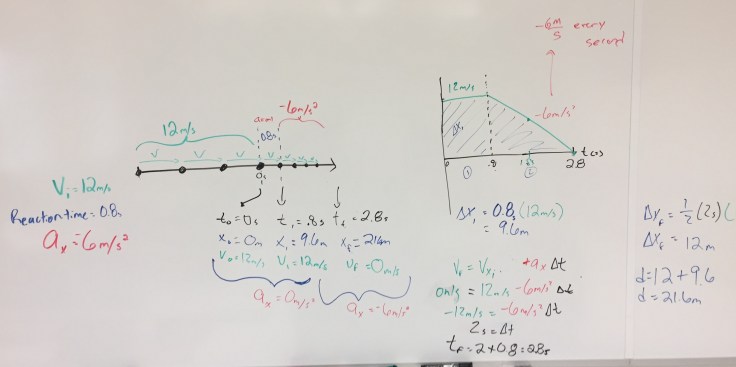
IMG_5276

It shows a lot of relationships. And certainly, in this map, you could probably route a path (or paths) of how they got from some beginning point to the final point.

So here what’s I’m interested in continuing to think about:

  1. Is this the useful twist on the metaphor? Or if not new metaphor, metaphorical extension? How so? Why not? What other metaphors may be useful?
  2. How might awareness of this metaphor help instructors to work from a different vantage point on “problem-solving” that can support students? Perhaps it can shape the way we model, ask questions, or set the stage for problem-solving?
  3. How might the adoption of the metaphor influence the way we as instructors think about assessing student work? Perhaps the path metaphor draw our attention to (show all the step), and with map-making it might draw attention to (shows relationships).
  4. If students think they are constructing maps rather than traversing paths, what different attitudes about problem-solving might develop? Will they talk about their work differently? What upsides / downsides might there be?

I want to say again that I don’t think that this “map-making” metaphor that I’m proposing is necessarily novel, nor do I think  that it will necessarily generate any new /novel instructional practices on problem-solving. But, it may be a useful way to think about (and package) practice that are already “map-like”.  My practices with problem-solving were changing before I had the metaphor, and I’m curious if the metaphor will allow me to further hone my practices and or better communicate the practices.

I’d be happy to know any of the following, plus anything else:

  1. How I am getting this metaphor all wrong?
  2. Examples of your students’ work that you think is more “map-like” or “path-like”?
  3. Pointing me to places that help me see where I’m just reinventing the wheel?

I can’t believe we are week into July.

Draft of New course Evaluation Survey

Its teaching evaluation season… so here’s my idea for a new survey.

An online version of this course would be equally effective.

This class helped me to understand how to learn the material. 

This course was a waste of time.

In this class, I formed meaningful relationships with other students and/or instructors. 

I feel like my instructor cares about me.

This course was one of the best courses I’ve ever taken.

No one would notice if I were absent from class.

This course challenged me to reconsider how I think about certain topics.

Participating in this course makes me feel like being part of something.

I feel isolated and secluded in this class.

I feel a sense of responsibility to the students and instructors in this class.

I am valued as an individual.

If I had to miss class, I would feel like I missed out.

I feel excited about the things I am learning.

Most days I have a good sense of what we are learning and why.

I know what’s expected of me and what I need to do to be successful.

My instructor cares that we learn.

I am given opportunities to learn from my mistakes and failures.

Thoughtful reasoning is valued in this class.

You need to be one of the instructors favorites to do well in this class.

Students are treated with very little respect.

The instructor of this course regularly shows contempt and disdain for students. 

This is the type off course students take to get an easy A.

My instructor seems to put a lot of work and care into the organizing the course.
I wish I could take other classes with this instructor. 
Students wanting to really learn should avoid this instructor. 

I dreaded going to class.

This is the type of class that if you put in a lot of hard work, you will learn a lot.

This course was much better than I expected.

This class was disappointing. 

The grade I expect to get in this class will reflect my level of mastery of the material.

The instructor promoted a competitive atmosphere among the students that was damaging to morale.
Everything we learned in this class was disconnected and random.

I received meaningful feedback on the work I produced.

I am proud of what I’ve accomplished in this class.

I have nothing bad to say about this class.

I have nothing good to say about this class.

Quick Notes: Impulse and Momentum

I need to write up a more complete debrief from this week on momentum and impulse stuff, but here are a few things I don’t want to forget:

  1. Spending a lot of time inquiring into (and being puzzled by) force vs. time graphs before mentioning impulse or momentum helped create a “need and interest to know”. We did invention tasks, observations, discussions, and predictions that all together made us really ready to hear about how physicists had invented an idea to simultaneously think about the effect of how much force and how much time. We did a lot of thinking and investigating with jumping off of and landing on to the force plate. I would definitely do landing first, and then jumping. Landing is more intuitive and orients us to what’s going on, and then jumping is what creates the real need to know. How can you jump higher with less force? We then looked at cart collisions with stiff and soft bumpers, to practice measuring impulse two ways in logger pro: Area under curve and Average Force x duration.
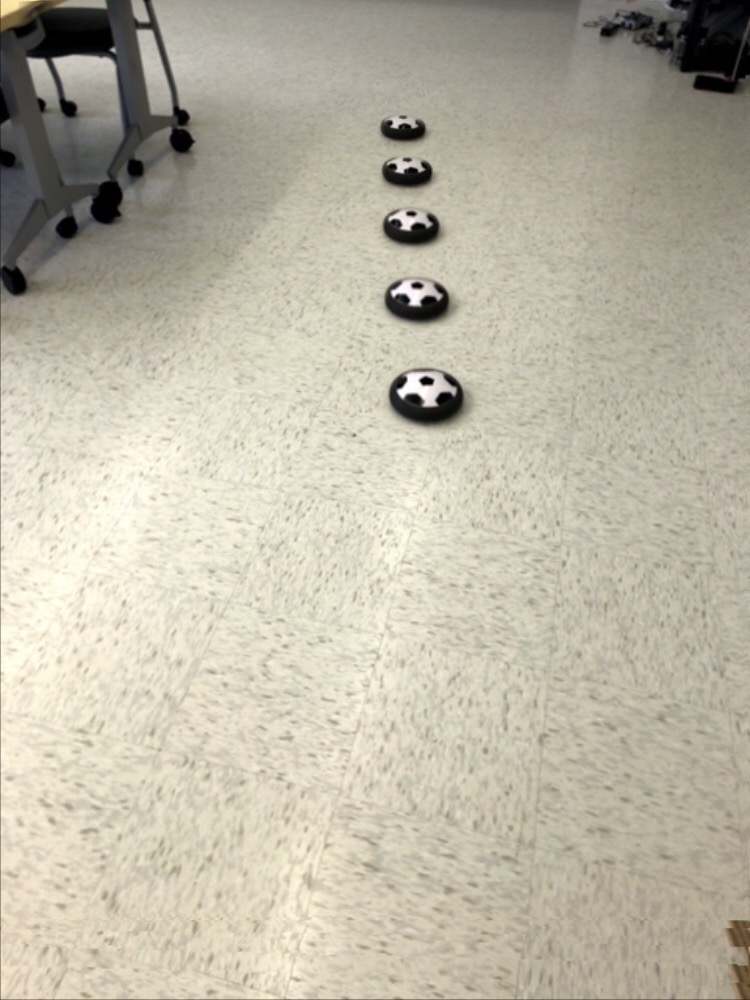
  2. With impulse, I also modeled how to make sense of it the number. I wish I had had more time for this, but I helped interpret impulse as how much force I would need to exert for 1 second to get the same effect (or how many seconds I would need to exert a 1N force). think kicking hover pucks vs. pushing them is a good way to show this. It’s important mostly for students to hone in the fact that there are many ways to get the same outcome. 
  3. For impulse, having a class feel continuous (temporally expansive, such that everyday seems connected to now) really helped students make sense of impulse and momentum by drawing on what they know. Without prompting, students were bringing up a lot of good knowledge, including force pairs upon talking about collisions and explosions. It was really easy this year for students to conclude that impulses delivered are equal and opposite, because they really knew how to identify forces pairs and that force pairs must be equal and opposite.
  4. To get toward momentum conservation, we examined explosions carefully,  with 1:1, 2:2, 3:3, 1:2, 2:1, 3:1, 1:3, and 3:2 mass ratios. Two carts were placed on a track with 120 cm of space to move (so 146 cm of actual space, since carts together take up 26). Through this sequence, we observed some, discussed, developed some rules, and then did predictions on how to divide up that 120 cm of space so that after the carts exploded they reach the end of their respective side at the same time. 3:2 was really hard. This discussion gradually folded in conversations about how the velocities compare, how the momenta compare, and how the impulses delivered compare. They did a few more practice scenarios, and then I did some direct instruction on why physicists think of momentum as “commodity” that is transferred, why that implies conservation, and what that means. A little neutrino history was folded in as well.
  5. We then took a look at a few collisions to further talk about momentum transfer and conservation. I did one demo of elastic collision with equal masses just to make the transfer visually compelling, and where story is simple to tell. But then went straight to looking at completely inelastic collisions. Instead of predicting what would happen, we starting observing, and I modeled the story telling process… I told the story two ways: one way was a conservation story (two carts come into collision each brining a certain amount of momentum, they “pool” their momentum, which then must be shared”. The transfer story is more about how much one cart had to lose, and the other to gain in order for that to happen. I did the stories quantitatively, but the emphasis was still on the narrative.
  6. Getting students to tell impulse-momentum stories / momentum transfer stories is a good goal. I had students use the physics classroom collision simulator to first observe (without predictions)… using momentum analysis to tell the two types of momentum stories.  “Combining momenta, and pooling together”” as a conservation story and then also “Individual loss and gain of momentum” as a transfer story. After telling the story (quantitively and narratively), then I’d ask students, “Do you think you could have determined that this would have been the speed before hand? Like predicted it? How would you do that?” Students progressed from telling stories, to anticipating how stories would end. I had students do whatever inelastic collisions they wanted from the start, but next time I would direct them to do a few key ones first, and then let them explore more.
  7. A few groups ended up trying elastic collisions, and found that they couldn’t predict what would happen, even though after watching it, they could tell the momentum story. I hadn’t intended that to happen, but it will be nice to return to this after learning about energy.
  8. In the week, we also did a more momentum-impulse type problem, how much impulse is delivered to a baseball. Can you draw a force vs. time graph that is consistent with this? We played the game of asking students to tell me what information they need, and then we researched on the internet values for baseball mass, pitching and hitting speeds. Students thought they would need mass and speed of bat, so we looked that up to. I would definitely watch this video with students before hand next time…

“I would give anything for students who are…”

A student shared this … hope to see yours in the comments.

“I would give anything for students who are…”

However you would complete that sentence—whatever characteristics you most desire to see in the students who walk through your door…

Make it your main goal, day after day, to develop those qualities in your own students.


Impulse: Lesson Planning

[Once again, there’s way too much I want to do here, and will need to think about how to scale back]

Constant Force Warm-Up?

Students have  warm-up with a “square” force vs. time pulse (constant over a time interval). Given initial velocity, they have to calculate final velocity using Newton’s Laws and Kinematics.

Edit: I may split groups into two warms up… different width / height pulses with same impulse. Why did these two force scenarios result in same change in velocity?  

Introduce Jump off the Force Sensor:

Orient students to how shape of graph (being constant) force allowed us to assume the acceleration was constant. Tell them I want to show them a force vs. time graph for a real world situation– me jumping off the force sensor. I want to ask them about what they notice about the graph, but before hand I want them to think about what they might expect to see.

I will show them the jump first without the force sensor data (it will be a shallow knee bend and then jump), and ask them to draw a motion diagram and free-body diagram for three stages.

Edit: well Ss work on this, I will encourage  them to do jumps and talk about it. 

  • At Rest on the sensor (before attempting to jump)
  • Jumping but still in Contact with the
  • In the air, before hitting the floor.

Then I will show them the Force vs. Time Graph. Question will be, “What do you notice about the shape of the graph?” Lot’s to notice and talk about here. 

Edit: why did value start where it did? Why did the value go up? Why did the value drop to zero? 

Brief Direct Instruction: Impulsive Forces

Introduce concept of impulsive forces with a few examples, and some features of impulsive forces:

  • Often involve relatively large contact forces between two objects
  • Magnitude of the forces rises and then falls
  • Often occur over short periods of time
  • Maximum force often occurs at maximum compression
  • Shape of the graph is non-constant and can be complicated.

I have a few clicker questions about to apply these ideas to the jump if I feel it’s needed:

  • Where on the graph did I lose contact with the scale?
  • Where on the graph did maximum compression of scale occur?
  • Where on the graph might I have been at my highest point?

Deep Knee Jump Discussion:

Students are going to be asked how the force vs. time graph might be different for a deep knee jump. Once again, show them without the reading. I could ask them to free-hand sketch, which I think, but I will use a clicker question to say, “Which of these does your graph best resemble?).

We will discuss and then observe. Key idea for discussion after is, “How did I jump higher with the deep knee bend even though the maximum force was less?” Key in on the idea of time.

Brief direct instruction to show how force vs. time graph allows us to see two things at once, how much force and for how much time.

Apply Idea of Force vs. Time to Landing on the Scale:

This time I’m going to jump down onto the scale from same height. Once by doing a heal landing with no knee bending, and another by doing a toe landing with knees bending. Students will be asked to whiteboard important features of how the graphs will be similar and different. Students discuss and then we observe.

Direct Instruction:  Representing and Interpreting Impulse

I will either lecture or students will do a close reading of a section on impulse as the area under a curve, followed by some direct instruction to clarify. A big goal I have here is how the impulse takes into account both the of variables that matter (how much force and for how long), but then also scaffold how to interpret the impulse number.

I want to show them that the area under both jumps was the same. That makes sense since the same job had to be accomplished — either way, I fell from same height with same speed, so the job that had to be done was stopping my fall. I will have to guide here strongly, but the idea is that number is how much force would be needed over 1.0 s to get the same result. That another way of stopping me would be to exert a constant force throughout 1.0s = to impulse number in N.

Short Practice Exercise (Hand Calculation):

Students will then have a triangle pulse to calculate the impulse for, to interpret the number, and then draw a different shape graph that was same impulse delivered over half the time.

Short Practice (Logger Pro Calculation):

Students will crash a cart into wall with a stiff bumper and squishy bumper, and calculate impulse delivered to cart. Guiding question will ask them to predict how shape of the force vs. time graphs will be similar / different? [Photogates are not for careful measurement now, but for making sure incoming velocity is same across trials).

What effect to impulse have? Jumping Animals and Marshmallow Blow Guns

From the reading, they talk about how animals that are good jumpers have long legs. Help them relate this to “extending the amount of time”. Just the idea that if you want to deliver a lot of impulse, sometimes it’s easier to extend the time rather than increase the force. But increasing the force is always an option as well.

Show the Marshmallow blow gun. Remind them how with projectile motion we often just assumed that projectiles “started” with some initial velocity. We ignored how they got that initial velocity. Watch I use this blow gun to deliver an impulse to the Marshmallow so it projectiles off with some initial velocity.

Ask students: What could I change about the blow dart gun so that the marshmallow shoots at a higher velocity? Ask why, but also how is consistent with what we’ve learned today about impulse? (Blow harder to increase force, or make a longer tube to increase the time). Let students play for a bit.

Is it possible to use a weak force and a hard force and get the same velocity? How?

Now ask students: What do you think will be different if I deliver the same impulse to a marshmallow that is twice as heavy (two in the gun)…  Let them go observe.

We need to draw out two big ideas here:

There are many different ways to deliver the same impulse, and have same end result (if object is same).

The same impulse delivered to a more massive object, however, results in less change to velocity:

Direct Instruction:


I will either have them do a careful reading or brief lecture on Impulse-Momentum Theorem. Key here is to connect lecture and /or reading to our activities.

Clicker Questions to Practice Applying Idea:

One problem that shows force vs. time graph… ask about change in momentum. Then ask, how much velocity that would translate into for 1.0 kg object, 2.0 kg, 0.5 kg?

One problem that shows a cart rebound off a wall, ask how much impulse was delivered? This will be very similar to quick lab exploration they did, so may do as a demo as well.

Problem-Solving (New Skill in Isolation):

Impulse delivered to a baseball hit off end of the bat?  Draw possible force vs. time graph

Impulse delivered to a passenger colliding into a wall:  Draw force vs. time graph for hitting dash vs. hitting the air bags. How similar / different?

Challenge Problem for Next Time (New Skill Integrated into Broader Skill Set):

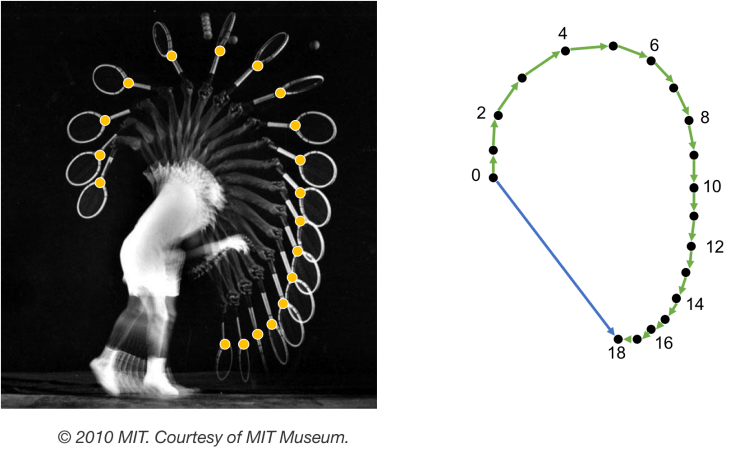
Launch marshmallow gun horizontally and mark the landing location. Work backwards to find the impulse delivered!

 

What Student Say that they Want in Group Members

I’ve been experimenting with having surveys where students can tell me one student they would prefer to work with (and why), and anyone they would prefer not to work with (and why, no character attacks), but then also ask them about what makes for ideal people to work with.

This last question has opened a few themes:

A very common one is just wanting to work with people who “care” to learn

  • “Care to learn/understand the material”
  • “I’d like a group that cares about physics, if that makes any sense”
  • “I would prefer to be with the students who really care, because I want really learn the material”
  • “people who aim to understand”

Another is people willing to put in time, effort, and who contribute

  • “I would like to work with people who do not mind staying over, doing the extra problems.”
  • “People who give input or ideas for solving problems and not just waiting for the others to tell them the answers.”
  • “I’d like to be with people who are there to try to do their best. If I was with someone who didn’t want to put in the work and just tried to slide by it would be a bit frustrating for me.”

Pacing  (goes both ways)

  • “I want to work the faster paced group”
  • “I don’t want to work with people who are trying to finish as quickly as possible.”
  • “Similar pace to me — It’s just hard to be patience and not go ahead and finish something on a problem when you know what to do but another person doesn’t.”

Talkative / Outgoing:

  • “People more outgoing than me – I tend to be more reserved at first and it helps me become more involved in discussion if someone else is more open to starting it.  “
  • “I want to work with more outgoing people, who talk and make the work more fun”

Attention to Detail:

  • ” With people who work their problems very neatly on the boards, so that we learn how work through problems clearly.”
  • “People who care about details, instead of rushing to get done”


I think a lot more themes could come out if I asked the right questions… but these are still interesting.

Blog at WordPress.com.

Up ↑